
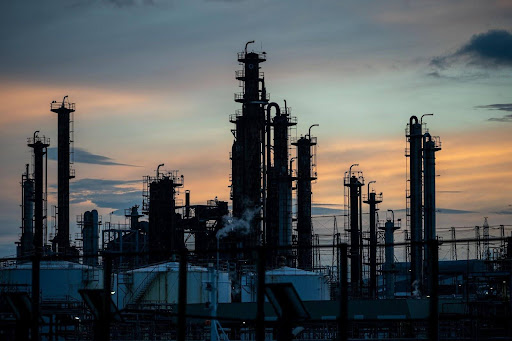
Oil prices climbed sharply Thursday as Iran mounted coordinated strikes on energy infrastructure across Bahrain, Iraq, Oman, and the Strait of Hormuz, heightening fears that the global crude supply chain faces months of disruption. Brent crude rose around 6% to trade near $98 a barrel after briefly topping $100. The attacks signaled that Tehran intends to use energy disruption as a sustained tool of military strategy.
The strikes hit fuel tanks in Bahrain, oil tankers near Iraq’s export ports, and merchant ships passing through the Strait of Hormuz. The Thai-flagged vessel Mayuree Naree was struck and reported three crew members trapped. Oman moved all vessels out of its main oil export terminal at Mina Al Fahal as a precautionary measure following drone strikes at a nearby facility.
Since the conflict began on February 28, the Strait of Hormuz has been functionally closed, cutting off the passage of roughly one-fifth of global seaborne oil and gas. Saudi Aramco warned that the continued blockade could have catastrophic consequences for world energy markets. With Mina Al Fahal effectively sidelined, the number of functional crude export points in the region has dwindled sharply.
A record coordinated emergency release of 400 million barrels from IEA member nations provided limited relief, as ongoing violence continued to overshadow supply-side interventions. The US contributed 172 million barrels from its Strategic Petroleum Reserve. President Trump said the action would help reduce prices as the US works to eliminate the threat posed by Iran.
Goldman Sachs revised its fourth-quarter 2026 Brent forecast upward to $71 a barrel. Deutsche Bank warned of stagflation risks. Asian equities fell, with Japan’s Nikkei and South Korea’s Kospi both declining, while European gas prices rose for a second straight day.