
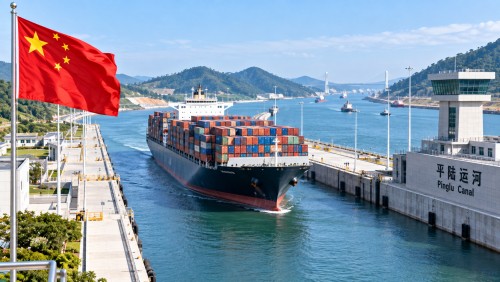
As China continues to strengthen its economic connectivity with Southeast Asia, the opening of the Pinglu Canal marks a significant development in regional trade infrastructure. Situated in the Guangxi Zhuang Autonomous Region, this new 134.2-kilometer waterway offers a more efficient route from southwest China to the sea, thereby enhancing trade ties with ASEAN nations.
The Pinglu Canal, costing approximately 72.7 billion yuan ($10.75 billion), connects the city of Hengzhou with the Beibu Gulf. It is a key component of the New International Land-Sea Trade Corridor, which aims to link China’s inland areas with ASEAN markets and beyond. The canal is designed to handle vessels of up to 5,000 tonnes, significantly cutting down the traditional inland waterway route by over 560 kilometers through Guangdong ports. This reduction is expected to lower logistics expenses by 18% to 30%, potentially saving over 5 billion yuan in transportation costs each year.
Historically, businesses in southwest China have faced higher costs when transporting goods to the coast. The Pinglu Canal now provides a more direct route for commodities such as coal, grain, minerals, new-energy materials, and automobile parts to reach international markets. The canal’s infrastructure includes three navigation hubs equipped with twin-line ship locks, which manage a 65-meter difference in water levels, and water-recycling systems that could conserve over 1 billion cubic meters of water annually.
Environmental considerations were also a priority during the construction of the canal. More than 98% of the excavated earth and rock was repurposed, and the canal features a fish passage and wildlife crossing to mitigate ecological impact. These measures highlight China’s commitment to integrating sustainable practices in its large-scale infrastructure projects.
The canal is expected to bolster economic relations between China and ASEAN, China’s largest trading partner. Trade between China and ASEAN exceeded $1 trillion in 2025, with bilateral trade reaching $744.41 billion in the first seven months of 2026. The new waterway is likely to attract more investment and encourage supply-chain integration along its route, facilitating smoother movement of goods between southwest China and Southeast Asian markets.