
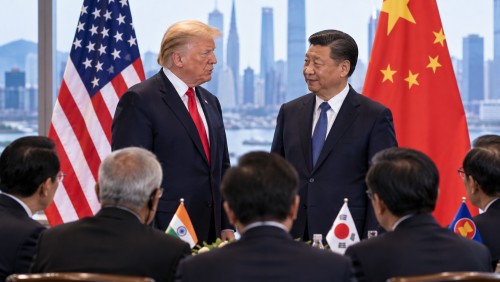
As tensions simmer in the Asia-Pacific region, the attention of U.S. allies is firmly fixed on the upcoming meeting between U.S. President Donald Trump and Chinese President Xi Jinping. The scheduled talks, primarily centered on trade and economic issues, carry the potential for significant implications regarding Taiwan, a sensitive topic for regional security.
Observers in Taiwan, Japan, and the United States are particularly concerned about any shifts in Washington’s stance on Taiwan. Such changes could destabilize the region, where Taiwan’s geopolitical status remains a contentious issue. Taiwanese officials are actively voicing their apprehensions to U.S. counterparts ahead of the summit, anticipating that Xi will address the Taiwan issue during discussions with Trump.
Japan is similarly cautious, advocating for the U.S. to uphold its existing language and policies on Taiwan to prevent escalating regional tensions. Japanese officials are seeking ways for Prime Minister Sanae Takaichi to communicate directly with Trump before the meeting, underscoring the importance Tokyo places on maintaining stability in the region.
A crucial point of contention is U.S. arms sales to Taiwan. President Trump has previously hinted at using a proposed arms package as leverage in negotiations with Beijing, although the package remains pending approval. This issue underscores the complex dynamics at play, as China staunchly opposes such sales, viewing Taiwan as an integral part of its territory and urging Washington to consider Beijing’s position.
The U.S. policy on Taiwan acknowledges China’s claim without endorsing it, maintaining unofficial relations and defense cooperation with the island. While the focus of the Trump-Xi meeting is expected to be on economic matters, Taiwan’s role in global semiconductor supply chains and its strategic importance ensure that it remains a significant concern for Washington’s Asian allies.