
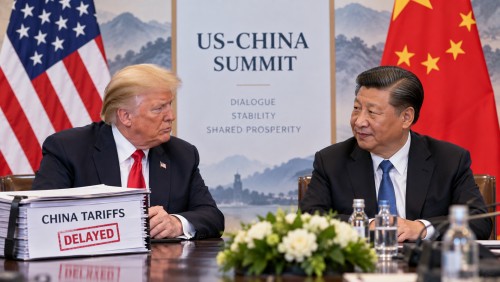
In the ongoing trade discussions between the United States and China, a significant development has emerged as the U.S. is considering a delay in announcing new tariffs on Chinese goods. This move comes in anticipation of a crucial meeting between U.S. President Donald Trump and Chinese President Xi Jinping, where the two leaders are expected to discuss trade issues among other topics.
The potential delay in tariff imposition appears to be a strategic decision by Washington to maintain leverage in negotiations. The U.S. administration had been preparing a trade report focused on China’s industrial overcapacity, which was likely to recommend a 7.5% tariff on certain Chinese imports. If implemented, these duties could elevate the overall tariff rate on Chinese goods to approximately 20%, a threshold previously mentioned by Beijing as consistent with the existing trade truce.
As part of the preparation for the leaders’ summit, negotiators from both countries are set to hold discussions aimed at reaching potential agreements. This meeting will mark President Xi’s first visit to the United States since 2023, underscoring its importance in the context of U.S.-China relations.
The backdrop to these discussions is the Trump administration’s broader trade agenda, which has included investigations into the trade practices of more than a dozen major partners under Section 301 of the Trade Act of 1974. These investigations have focused on issues like excess production capacity, and any resulting tariffs could further strain trade relations with China and others.
China has signaled that it could retaliate if U.S. tariffs surpass the levels agreed upon in the current trade truce. Chinese officials have consistently argued that using concerns over industrial capacity to justify protectionist measures is unwarranted. As both nations work towards negotiating trade commitments, tariffs remain a pivotal issue that could shape the future of economic relations between the two largest economies in the world.