
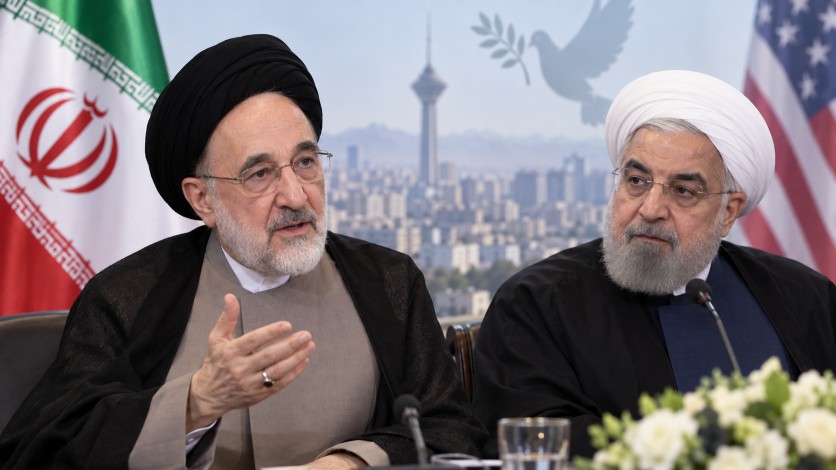
In a notable challenge to Iran’s hardline stance towards the United States, former Iranian presidents Mohammad Khatami and Hassan Rouhani have advocated for an “honourable” or “dignified” peace. Their calls for dialogue mark a significant departure from the prevailing wartime rhetoric within the country. Rouhani, in particular, has emphasized the importance of public opinion in shaping foreign policy, suggesting that the Iranian people should participate in deciding whether to continue the current confrontational approach with major powers.
Khatami has echoed similar sentiments, cautioning against the dangers of governing through extended wartime emotions. He has consistently supported diplomatic engagement and negotiations, underlining the priority of Iran’s long-term national interests over sustained conflict. Their remarks have sparked considerable backlash from Iranian hardliners, with conservative media outlets branding the former presidents’ stance as tantamount to surrender. Additionally, rallies organized by loyalist factions have included chants condemning any move towards compromise, and the hardline newspaper Kayhan has even called for inquiries into the actions of Khatami and Rouhani.
This debate occurs amid mounting economic challenges for Iran, exacerbated by rising fuel prices and declining oil revenues. These economic pressures, coupled with persistent tensions in the strategically vital Strait of Hormuz, continue to pose significant risks to global energy markets. Despite these internal and external pressures, Iranian officials have maintained a firm public posture, suggesting that Tehran could adopt a more aggressive military stance if diplomatic efforts with Washington fall through. This has raised fears that economic constraints might lead to further escalation rather than prompt immediate concessions.
Meanwhile, there are ongoing regional diplomatic efforts aimed at easing tensions. Notably, Saudi Arabia and Iran have maintained communication, with high-level discussions focusing on preventing further escalation and fostering regional stability. These diplomatic endeavors underscore a widening gulf in Iranian policy discourse, where calls for negotiation and public engagement stand in sharp contrast to the government’s warnings of possible military escalation if demands remain unmet.