
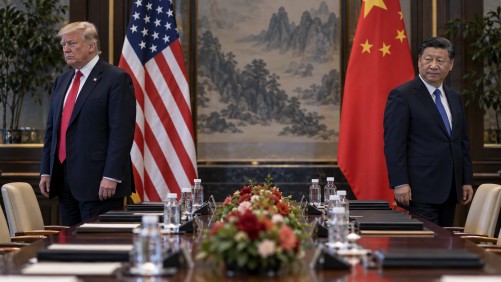
During a recent summit in Washington, US President Donald Trump and Chinese President Xi Jinping concluded their discussions without reaching a major agreement on artificial intelligence (AI), despite rising global concerns over the rapid advancement of this technology. The three-day meeting marked the first visit by a Chinese head of state to the White House in over a decade, highlighting the importance of the discussions.
While the summit covered a broad range of topics such as the conflicts in Iran and Ukraine, Taiwan, and trade relations, AI was a significant focal point. President Xi emphasized the shared responsibility of the United States and China in ensuring AI development is managed responsibly to remain under human control. He advocated for increased cooperation between the two nations to address the potential risks associated with AI technology.
However, no concrete framework or agreement was established to regulate the development of advanced AI systems or to establish common safety standards. This leaves the field open for continued, uncoordinated progress by each country. President Trump reiterated the importance of the United States maintaining its technological edge over China and introduced his preferred term “super intelligence” for advanced AI during the talks, though specific details on the discussions were limited.
In a notable policy move, the summit resulted in an extension of the existing trade truce between the two countries for an additional two months, a decision likely to impact economic relations positively in the short term. Meanwhile, the lack of a significant AI agreement underscores ongoing challenges in bilateral technology negotiations.
The meeting also included a visit to the National Archives, where President Trump and President Xi viewed pivotal US founding documents, symbolizing the historical significance of their diplomatic engagement. Both leaders are scheduled to reconvene later this year at the Asia-Pacific Economic Cooperation summit in China and the G20 summit in the United States, potentially providing further opportunities for dialogue on these critical issues.